


The Trump administration’s “One Big Beautiful Bill,” passed in July 2025 and also known as H.R. 1, has already devastated some safety net programs, like food aid—and in the coming months, the bill is likely to strip numerous Medi-Cal recipients in California of health-care coverage.
The bill has taken effect in phases, affecting people’s lives through cuts to the Supplemental Nutrition Assistance Program (SNAP)—known as CalFresh in California—and the Affordable Care Act. Funding to Medicaid, the health-insurance program for low-income individuals, people with disabilities and families, will be slashed by more than $900 billion over the next decade, according to the Congressional Budget Office—the largest cut to Medicaid in the program’s history.
Medicaid in California is called Medi-Cal. The federal cuts to Medi-Cal are estimated to cost tens of billions of dollars each year, which could result in 2 million Californians losing their health care, according to the Department of Health Care Services.
Changes to Come
Refugees and international students will no longer be eligible to receive Medi-Cal, said Jessica Altman, executive director of the state’s health-insurance marketplace, Covered California. Altman said those currently enrolled in the program will retain coverage for the remainder of this year, but it will end in January.
The federal government decided which immigrant communities could keep Medicaid and which to push out—and all Covered California can do is develop a resource list for those affected, Altman said.
“Right now, it’s about 130,000 of our current enrollees who will be affected by this change,” Altman said. “All we can do is reach out, inform them of the changes, and maybe, if any of them have gotten their citizenship, update their statuses.”
“In the Coachella Valley, a lot of folks are agriculture workers, so when it’s in season, they’ll work full-time jobs. But when their crops are out of season, sometimes they won’t be able to meet that 80-hours-a-month threshold.” Ayla Lopez, organizing manager at Inland Empire United,
Another slate of changes is scheduled to roll out in January, including new work requirements that demand non-exempt Medi-Cal recipients to complete 80 hours of work, school, community service or training each month.
Thomas Pham, chief strategy officer at the Inland Empire Health Plan, a health care organization for low-income residents in Riverside and San Bernardino counties, said the requirement could lead to more than 120,000 of its members losing their health insurance.
Community Impact
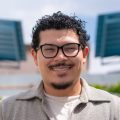
Ayla Lopez is the organizing manager at Inland Empire United, a coalition made up of nine organizations that advocate for worker protections and local needs, and also host food drives. Lopez said the work requirements may be difficult to meet for people who don’t work standard jobs.
“In the Coachella Valley, a lot of folks are agriculture workers, so when it’s in season, they’ll work full-time jobs,” Lopez said. “But when their crops are out of season, sometimes they won’t be able to meet that 80-hours-a-month threshold.”
Lopez said she knows many people who will be negatively affected by the “One Big Beautiful Bill.”
“An individual I spoke to who lives in a mobile home park, mainly made up of immigrants, is scared, because health care is already a scary thing for them to access, given the current political landscape,” Lopez said. “Now they aren’t sure if they are even eligible, and with cuts to SNAP, it leaves a lot of folks uncertain of their care and their families’ care in the coming years.”
A ‘Trickle-Down Effect’
Richard Carpiano, a public policy professor at UC Riverside, said Medi-Cal recipients aren’t the only people who will feel these changes.
“The trickle-down effect is that it will impact the states’ funds, since they will have to allocate, cut or divert funds from other services to pick up the slack,” Carpiano said.
Hospitals will also feel the impact of the bill, because fewer patients with insurance means lost revenue, Pham said.
“Coachella Valley has a substantial number of migrant workers who are undocumented,” Pham said. “With less access to care, you’re going to see spillover effects onto emergency services and urgent care centers, which could become primary care for a lot of low-income marginalized groups.”
Pham said he is especially concerned for hospitals in rural areas whose patients are mostly Medi-Cal recipients.
“Because those uninsured (patients) won’t be able to pay cash for that (emergency) visit, it could have a domino impact,” Pham said. “As the hospital incurs more charity care or uncompensated care, it could pass on the rate increase to the other types of care, like commercial care.”
What’s Next?
Advocates said those who can change or update their citizenship status should do so. Meanwhile, health agencies are trying to make sure residents are informed about the changes.
Lopez said Inland Empire United is partnering with a nonprofit health organization, AltaMed, to open clinics with low-cost healthcare in the Inland Empire.
“One good thing that’s happening is that, due to federal cuts, health care providers are stepping up to do something—because health care is a basic human right,” Lopez said.

I have a mentally disabled son who cannot work. His Snapbenefits have been reduced to 160.00 per month. He is 42 and I am scared to death that his Medi-Cal will be taken away from him!