


Before the first white settlers arrived in Palm Springs, much of the Agua Caliente Band of Cahuilla Indians’ culture revolved around the shaman, or medicine man.
The role of shaman varied, usually covering both practical and religious matters, but they were reputed to have extraordinary powers gained from spiritual beings—including the power to heal people. People relied on them to prepare the correct mixtures of herbs and potions to take, and there are numerous anecdotal instances of recovery.
By the late 1800s, white pioneers began to settle in Palm Springs. These settlers were accustomed to care provided by licensed medical personnel.
Dr. Harry Lee Coffman: The First Licensed Doctor
The first physician licensed by the state of California to set up practice in the village of Palm Springs was Harry Coffman. He and his wife, Nellie, started the Desert Inn and Sanatorium and ran it together. Nellie became better known locally, as she continued to run the famous resort for decades. The Desert Inn, however, was first a sanatorium—and Dr. Harry Coffman played no small part in getting it established.
The son of Charles A. Coffman, Harry was born in Marysville, near Sacramento, on Oct. 1, 1866 or 1867. The family then settled on a 400-acre ranch in Ranchito—now Pico Rivera, between Los Angeles and Whittier—where Harry’s father was one of the organizers of the Southern California Walnut Growers Association. Harry managed the walnut groves for his father and became enamored with the widow, Nellie Norton Roberson, who lived at a nearby hotel that his father was managing. Her husband had died in a fire before their son, George Roberson, was born.
Harry and Nellie wed on March 5, 1891, and they had a son, Owen Earl Coffman, born in 1892. In their early years together, the young family lived on the walnut ranch.
In 1896, encouraged by Nellie, Harry entered the University of Southern California as an English major. Shortly thereafter, he decided he wanted to become a doctor. Harry enrolled in the Medico-Chirurgical College of Philadelphia, a three-year medical school, and then interned in Philadelphia at the Lying-In Hospital. He earned his medical degree in 1901. Nellie attended his graduation, and the couple enjoyed a two-week vacation in the East before returning to California.
Over the next seven years, Dr. Coffman built a successful medical practice in Santa Monica. During that time, he learned about the recuperative climate the desert offered for respiratory patients—so the Coffmans decided to move to the desert and open a hotel-sanatorium. Harry gave up his medical practice, and the Coffmans put $2,000 down for property in the heart of Palm Springs. They bought two adjoining properties, including Lavinia Crocker’s former Green Gables Health Resort, which consisted of a home and several canvass tent-houses.

The Coffmans moved to Palm Springs on Oct. 16, 1909, where they immediately established the Desert Inn and Sanatorium. There—on land that would later become the Desert Fashion Plaza, and much later the downtown Palm Springs Park—Dr. Coffman treated numerous patients who came seeking respiratory ailment cures. He soon had to hire assistants, the first being a nurse named Miss Grace Harford.
Partially due to their different visions for the property, the marriage of Dr. Harry L. Coffman and Nellie Coffman foundered and was legally terminated in 1914. Nellie morphed the sanatorium into one of the original first-class desert resorts in the country.
Meanwhile, Dr. Harry left Palm Springs and his family, and initially went to Calexico to practice medicine. He also had a ranch in Cherry Valley before he moved to Alpine, Calif., where he cared for patients as a sanatorium doctor until his death on April 30, 1935. The first doctor to practice medicine in Palm Springs was buried in the Welwood Murray Cemetery in Palm Springs.
Dr. Jacob John Kocher: The First Pharmacist
Dr. Jacob John (J.J) Kocher was a physician and pharmacist who also opened the village’s first pharmacy. He built an adobe building directly across the street from the main entrance of the Desert Inn and called his new drug and apothecary shop the Mortar and Pestle. He even had a rock which had been used as a mortar on the porch in front of the store.
The “Desert Doctor,” as he became known, opened for business in November 1917. His guest-book signatures included most of the local citizenry, both Indigenous and settlers. News of his ability as a doctor spread, and he was increasingly called upon to perform surgery, deliver babies and attend to people’s general well-being.
Dr. Kocher and his wife, Reta, were both charter members of the original Palm Springs Presbyterian Church, organized in March 1917 with 19 charter members. The Kochers lived by the Cree Ranch in Cathedral City.
Books were Dr. Kocher’s passion, and he helped found a private library. He also the valley’s nature and would often go out to the desert or the canyons to paint. When the Palm Springs Board of Trade was formed in 1918, Dr. Kocher, who had developed properties, became its first president.


Dr. Kocher also played a large role in the birth of midcentury desert modern architecture. His brother, A. Lawrence Kocher, was a noted New York architect and managing editor of Architectural Record. He had teamed with Albert Frey, later one of Palm Springs’ most influential architects.
In 1934, Dr. Kocher invited his brother to Palm Springs to design a small office/apartment dual-use building. Frey accompanied Kocher to Palm Springs, and he fell in love with the desert. The Kocher-Samson Building, at 766 N. Palm Canyon Drive, designed by Frey and A. Lawrence Kocher, is considered Palm Springs’ first modernist international-style building, and in effect, it started what would be known as “desert modernism.” The building still stands and houses Bon Vivant, a shop offering decorative accessories.
The Kocher-Samson Building was the last project Kocher and Frey would do together. They dissolved their partnership in 1935, and Frey returned to Palm Springs to stay.

Dr. J.J. Kocher was remembered fondly for his medical service to the community. In 1936, a “Stork Party” celebration was held for Dr. Kocher, and many of the “babies” he delivered were in attendance, including the first non-Indigenous person born in Palm Springs, Ted McKinney (Jan. 11, 1919), his sister Barbara McKinney, Beatrice Willard, Elizabeth Coffman and Owen Coffman.
Sources for this article include Nellie’s Boardinghouse: A Dual Biography of Nellie Coffman and Palm Springs by Marjorie Belle Bright (ETC Publications, 1981) and Palm Springs: First Hundred Years by Mayor Frank M. Bogert (Palm Springs Heritage Press, 1987).
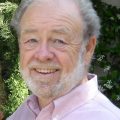
Also of note, Dr. Bingham founded the Angel View Hospital in Desert Hot Springs. He located it at the top of Miracle Hill, so named because of the close proximity of both cold water aquifers and hot water mineral springs. He believed the waters would be beneficial to children with juvenile arthritis and other health conditions.