


There is a lot of local love for film festivals—but a documentary-focused fest taking place in March, now in its 13th year, took a while to catch on locally, despite its international renown.
The American Documentary and Animation Film Festival, aka AmDocs, will feature films made across the globe, from Thursday, March 21, through Monday, March 25, at the Palm Springs Cultural Center. It will feature more than 200 films, divided into 55 different programs including shorts and feature-length movies, with topics ranging from love to immigration, sports, humanity and more.
Ted Grouya, the founder and director of AmDocs, explained why he launched the festival back in 2012.
“I started out as a filmmaker, and I traveled to any number of festivals around the world with my own work, and the people who own the Camelot Theatres were very good friends,” Grouya said. “They established … the Palm Springs Cultural Center, and they said to me, ‘Isn’t there something we can do to help build more visibility? Because of both your travels and experiences being local, maybe you could come up with an idea.’ … I did a little bit of research, and I realized that there were, at the time, no documentary film festivals on the West Coast—nothing to speak of within a 100-mile radius of Los Angeles. I said, ‘Boom, there’s the opportunity—there’s a niche.’”
Not only did Grouya want to make AmDocs the “biggest and or the best event possible,” in his words; he wanted to make sure it supported the filmmakers themselves—so he set up the American Documentary Film Fund. Film-industry professionals review submissions from filmmakers for funding consideration each year, and per the website, “An amount up to $50,000 may be awarded or distributed in any given year.”
“The U.S. is the richest country in the world, but we don’t do a lot to support the arts, so we thought this is our little way to help,” Grouya said. “We’ve done that basically from our own funds, tickets and submissions, and we’ve given back to the filmmakers with that film fund. Any number of films have made it to HBO, Showtime, PBS and MTV; a few have been shortlisted for the Oscars, and others have won Emmys. We’re really proud of what we’ve been able to do in such a short period of time.”
Grouya said the festival slowly attracted an international fan base—and that local recognition was even harder to come by.
“We slowly built our reputation internationally, even though we weren’t known so well by the locals, being in the shadow of the Palm Springs International Film Festival,” Grouya said. “We worked on our reputation to the point where, after six years … the American Society of Motion Picture Arts and Sciences recommended us (to be a qualifying festival) for certain categories for Oscars consideration. Our reputation was good enough that we got that after the minimum six years. … Each year, we build that reputation, and there’s sort of a Yelp amongst industry and filmmakers, which I was unaware of until recently, where they rate the festivals, and we’re consistently in the Top 100 out of the whole world of over 12,000 festivals. We don’t really care so much about status, but it’s nice to know that you’re getting these five-star reviews, because our mission is really to bring the best to our audiences here, as well as to have a great experience for our industry guests.”
AmDocs started with a focus on documentaries, adding animation in the festival’s second year.
“We first kind of did it as an aside, and then we realized the importance of it in the industry … not just as cartoons, but there are some very mature themes that are done documentary-style, but in animation,” Grouya said. “We really push that now, and because a lot of these artists are so talented with drawing in 3-D or 2-D, they have opportunities outside of these arts, and they can become graphic artists, or they can actually become gamers. The gaming industry just itself equaled both film and music revenues combined.”
There are more connections between documentary and animation than one may think.
“In Central and Eastern Europe, (documentaries are) much more observational, and a little more story-driven. I’m seeing more and more of that now across the spectrum, which I think is good.”
Ted Grouya, the founder and director of AmDocs
“(Documentary) is a very popular genre on the streamers; I think it really all began in many ways with Making a Murderer on Netflix, because everyone tried to copy that formula,” Grouya said. “Those docuseries now are uber-popular, but in a lot of them, they don’t have archival footage. Errol Morris, who was a famous documentary filmmaker, particularly in the ’80s, loved doing re-creations. … We love it when we see archival (footage), but there are plenty of instances in history where there’s no footage to be able to cut back to, so what you’re seeing more and more is this combination of animation and documentary, and it’s very, very effective.”
Thanks to AmDocs’ variety of films every year, Grouya has watched the genre change over the last 12 years.
“It is said that the very first things shot on film were documentaries,” he said. “The North American formula that’s still kind of prevalent today is the interview. You might have a film of 90 minutes, and it’s mostly interviews. … In Central and Eastern Europe, (documentaries are) much more observational, and a little more story-driven. I’m seeing more and more of that now across the spectrum, which I think is good. It’s healthy for the filmmakers; it pushes them a little more, and they’re going to have to work more than just setting up lights in the static situation and interviewing someone. I don’t want to knock them—that’s their business, and they can do whatever they want. However, if you want to keep your audience engaged, you have to evolve, so I’m seeing more of that evolution.”
Grouya said he’s proud of how the festival has grown, from 59 films in the first year to more than 200 in 2024.
“There were always great films … but we went out to find some of these more story-driven documentaries, whereas now, they come to us,” Grouya said. “I still go to festivals and different places in the world, but the films really have to knock me on my butt in order for us to invite them. … I would say that of our programming, 95% is based on direct submissions, so that’s really a compliment to the filmmakers and the films, because we don’t have to go necessarily to Sundance or Berlin or Cannes, even though we’ve had some of those films. They still come to us, because they know that our programming reputation is solid.”
Grouya said he’s worked to make sure AmDocs has alliances with festivals in different parts of the world—and that has been helpful to American filmmakers.
“One of the things that we’ve observed when I go to these events is there’s a big antipathy towards Hollywood—and that, unfortunately, will include anyone from the U.S.,” Grouya said. “That’s not fair, because most of the (American documentary) filmmakers are independent, but there’s this thing about Hollywood encroaching on cultural identity, and I understand that, but they leave out a lot of great films that are made by filmmakers here. There are 340 million Americans, so there have got to be a few good films.
“I would say, on average, half of our programming comes from North America. With our alliances, we are able to curate a selection of U.S.-based films at our partner festivals, and they, in turn, get (to curate the) program from Latin America or the Baltics, wherever that festival was, at our festival. It gives exposure that our filmmakers wouldn’t normally have internationally, and it really doesn’t cost much—but it’s one of the unique things that we do at AmDocs.”
In lieu of proclaiming a yearly theme, AmDocs opts for more of a watch-and-see attitude.
“We obviously have themes, and if you sit in the theater, you’ll see how complex the programming is, but we’re not didactic,” Grouya said. “We don’t force it down your throat. You either get it, or you don’t, and I think they do.”
Grouya shared his thoughts on some highlights of this year’s festival.
Superpower, Thursday, March 21: This film was directed by Sean Penn and Aaron Kaufman; Penn will make an appearance at the screening, which is the festival’s Opening Night Event. “With what’s going on with Ukraine now and still going on at the national level with legislators (and funding decisions), that should be a pretty robust discussion after we see his film,” Grouya said.

Show Her the Money, Friday, March 22: “Watching these films is like continuing education every day at a university. For example, (this film is about) entrepreneurship, focused on women. Women, of course, are treated as unequal in many ways in our society, but when they’re up there pitching in the Silicon Valley for some new product or content that they’re trying to sell, they’re only apt to get about 3% of the money that’s available. This particular film shows that there are women who are supporting one another in order to break that glass ceiling.”

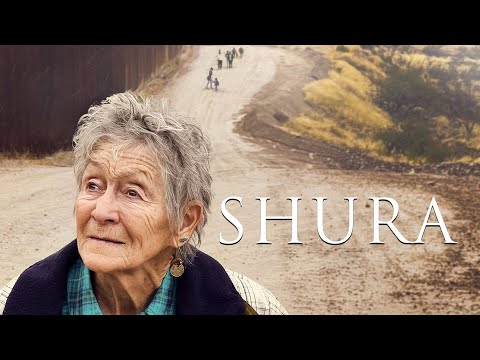
Shura, Sunday, March 24: “We have films about seniors who do things to help others. (This is) a great film that was shortlisted for the Oscars, and it follows people who are on the border. Because things are so tough … they go out there, and they find ways to bring food and clothing and water to these immigrants, whether they’re going to get into the U.S. or not. These are stories that most people don’t know about.”
The Test, Sunday, March 24: “It’s about seniors helping this man from Nigeria. He’s here legally, but he has to prepare for his naturalization exam, so the seniors work with him (to teach him) about history and everything related to understanding what you need to know before you take the test to become a naturalized American. It’s beautiful.”

The American Documentary and Animation Film Festival takes place from Thursday, March 21, through Monday, March 25, at the Palm Springs Cultural Center, 2300 E. Baristo Road, in Palm Springs. Tickets start at $10. For tickets or more information, visit amdocfilmfest.com.